Maritime safety
Cruise ship safety and maintenance: protecting life onboard and the environment
International rules, fire prevention, sanitation, maintenance, and environmental management behind safe passenger shipping.
Adapted from a column Richard R. Dos Santos wrote for the digital magazine Utopo.
A floating city that cannot rely on improvisation
A cruise ship combines accommodation, restaurants, electrical systems, water treatment, entertainment, medical care, and maritime transportation in a single structure. That complexity explains why passenger and crew safety requires regulation, continuous maintenance, and a culture of prevention.
Behind the visible comfort is a network of inspections, certificates, emergency drills, and sanitation controls. The goal is not only to react to an incident, but to reduce the likelihood of one and be prepared if it occurs.
SOLAS, the IMO, and international standards
The International Maritime Organization (IMO) develops the global safety framework. Its central instrument is the International Convention for the Safety of Life at Sea, known as SOLAS. The convention establishes minimum standards for ship construction, equipment, and safe operation.
Flag States verify compliance and issue certificates. Port States can also inspect foreign ships when there are grounds to question compliance. Classification societies add another layer by reviewing structural and technical matters under their own rules.
Maintenance, surveys, and shipyard periods
Cruise ship maintenance does not follow one universal timetable. Frequency depends on the equipment, vessel age, intensity of use, manufacturer requirements, classification society, flag State, and operating route.
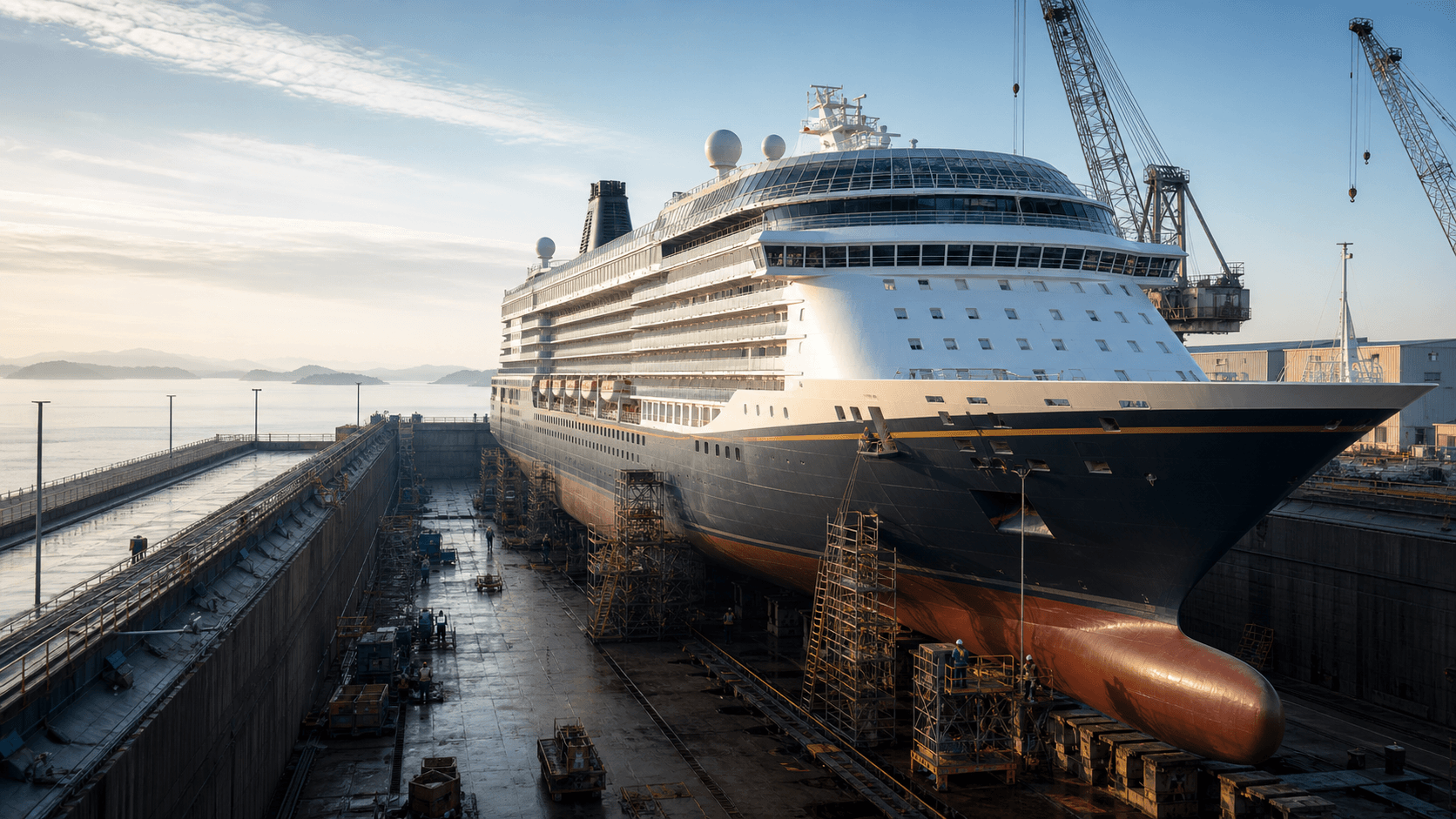
There are daily and periodic checks onboard, statutory surveys, planned work during port calls, and broader shipyard or dry-dock periods. These can include the hull, propeller, engines, coatings, electrical systems, smoke detection, and passenger facilities.
- Structural inspections and hull repairs.
- Engine, propulsion, and electrical-system reviews.
- Testing of alarms, smoke detection, and emergency equipment.
- Renewal of coatings and public-use facilities.
- Updates to communications, connectivity, and control systems.
Fire prevention and emergency response
On a passenger ship, fire requires rapid detection, containment, and clear escape routes. SOLAS chapter II-2 and the International Code for Fire Safety Systems (FSS Code) establish requirements for materials, alarms, sprinklers, pumps, extinguishers, low-location lighting, and means of escape.
Technology only works within a prepared organization. Crew members therefore receive training and conduct drills. Passengers also receive emergency instructions at the start of the voyage.
Drinking water, food, hygiene, and disease prevention
Safety onboard is also a public-health matter. The World Health Organization maintains a ship-sanitation guide that serves as a reference for controlling risks related to water, food, hygiene, and disease.
For ships operating under the relevant United States jurisdiction, the CDC Vessel Sanitation Program conducts periodic unannounced inspections. It reviews medical centers, drinking water, galleys, pools, housekeeping, pest management, child activity areas, and ventilation systems.
Environmental protection and waste management
Managing waste, wastewater, and potentially polluting substances is part of responsible operation. Procedures must separate, store, treat, and discharge waste according to applicable rules and authorized port reception capabilities.
Maintenance also has an environmental dimension: a clean hull, efficient engines, and properly calibrated systems can reduce consumption, emissions, and pollution risks.
What passengers cannot see
When someone boards one of these giants, destinations, rest, and entertainment usually come to mind. Yet that experience depends on technical discipline operating out of sight: inspections, maintenance, hygiene, training, and documentation.
Understanding that work allows us to view the industry more completely. Safe and pleasant navigation is not accidental; it results from rules, preparation, and shared responsibility.
Updated:
Reference sources
Related books